


Your Civil Claim and the Criminal Case

A drunk driving crash sets two different legal processes in motion at the same time. The state of Texas pursues a criminal case against the drunk driver, while you can file a separate civil personal injury claim to get payment for your losses.
The State’s Criminal DWI Case
The criminal case aims to punish the driver for breaking the law. A prosecutor uses police evidence to seek a conviction, which may result in fines, license suspension, or jail time. While a DWI conviction helps your claim, your case doesn’t depend on it.
A skilled drunk driving attorney builds a strong civil case for you regardless of how the criminal proceedings end.
Your Civil Personal Injury Claim
Your civil claim is you versus the drunk driver, or more often, their insurance company. Your goal isn’t to punish with jail time but to secure financial compensation for all your injuries and losses.
The standard of proof is lower in a civil case, making it possible to hold a driver liable for your injuries even if they’re acquitted of a DWI.
A lawyer’s job is to prove that the driver’s negligence caused you harm. Evidence of their intoxication is a powerful part of proving this claim. It shows they made a choice that displayed a conscious disregard for the safety of others.
The Types of Evidence in a Drunk Driving Accident
A strong injury claim is built with several types of proof. Some of this evidence is created by law enforcement, while other proof comes from the scene of the crash itself. Your attorney knows how to find and use every piece to tell the complete story.
Evidence From Law Enforcement
Police officers who respond to the crash scene are trained to spot the signs of impairment. Their investigation creates the official evidence that forms the backbone of your claim. This is often the strongest proof of the driver’s intoxication.
Evidence gathered by police includes:
- The Police Accident Report: This report contains the officer’s notes on the accident, including any observations that the other driver smelled of alcohol, had slurred speech, or had bloodshot eyes.
- Field Sobriety Test Results: The report will note if the driver was asked to perform field sobriety tests and if they failed them.
- Breathalyzer or Blood Test Results: The results of any chemical test showing the driver’s blood alcohol concentration (BAC) are compelling pieces of evidence.
Your Personal Observations and Evidence
Your firsthand account helps paint a complete picture of the event. Write down and organize these observations before memories begin to fade.
Include everything you remember about the other driver’s behavior and create a detailed timeline from your perspective. Did they seem confused or unsteady on their feet? Did they slur their speech or try to hide open containers in their car? These notes help your lawyer identify key facts to build your case.
Organize any photos or videos you took at the scene into a specific folder on your computer and create a backup. Pictures of the crash scene, vehicle damage, and the surrounding area help reconstruct the event.
Eyewitness Testimony
A neutral third party who can testify that they saw the driver swerving all over the road just before the crash strengthens your case. Try to get the name and contact information of any potential witnesses.
Your attorney’s legal team interviews these witnesses to get a formal statement. These statements add another layer of proof to counter any denials from the at-fault driver.
Texas Dram Shop Act
Sometimes, the driver isn’t the only one responsible for your injuries. Under the Texas Dram Shop Act, a bar, restaurant, or store that sells alcohol to an obviously intoxicated person may also be held liable for the harm that person causes.
Holding these establishments accountable requires proving they knew, or should have known, that their customer was past the point of safe consumption.
This creates a second source of potential compensation for your injuries. An experienced attorney knows how to investigate whether a bar or restaurant shares the blame for the drunk driving crash.
How Your Lawyer Proves a Bar Is Liable
Proving a dram shop claim requires a fast and thorough investigation. Your attorney needs to show that the establishment continued to serve alcohol even when it was clear the person was dangerously impaired.
Your lawyer searches for:
- Receipts and Credit Card Records: This evidence shows where the driver was drinking and how much alcohol they purchased.
- Video Surveillance Footage: Your attorney sends a spoliation letter demanding that the bar preserve its security camera footage from the night of the accident.
- Employee and Patron Interviews: Your legal team interviews staff and other customers who were at the bar to get testimony about the driver’s visible state of intoxication.
How a Lawyer Helps Your Drunk Driving Claim
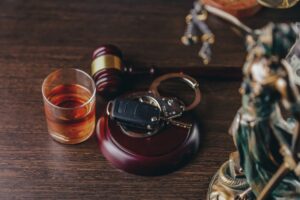
A personal injury lawyer has the authority and resources to collect evidence you cannot get alone. Their job is to build an ironclad case against the drunk driver. They handle the entire process of evidence collection while you focus on healing.
Using Legal Power To Obtain Official Records
Your attorney uses the power of the law to get access to crucial, confidential records. They know exactly who to contact and what legal documents to file. This secures proof that would otherwise be unavailable to you.
They formally request the full police file, including any dashcam or body camera video of the drunk driver’s arrest. They subpoena the certified results of the driver’s blood alcohol tests from the forensics lab.
Your lawyer will also track the criminal case and get all the official court documents, including the final judgment of conviction if there is one.
Battling With the Insurance Company
An insurance company’s goal is to settle your claim for the lowest possible amount. They may even try to treat a drunk driving case like a standard accident claim. A lawyer uses the evidence of intoxication to fight for maximum compensation.
They present the proof of the driver’s impairment as evidence of gross negligence. This shows the driver made a reckless choice that rises far above a simple mistake.
Seeking Punitive Damages To Punish the Driver
A drunk driving accident claim often involves seeking punitive damages in addition to your standard compensation. Punitive damages are designed to punish the at-fault party for extremely reckless behavior and to deter others from doing the same.
A lawyer uses the evidence of the driver’s intoxication and conscious decision to drive while impaired as the grounds for demanding these extra damages. Seeking punitive damages sends a strong message that society will not tolerate this dangerous conduct.
Texas Laws That Affect Your Compensation
Texas has two specific rules that have a major impact on your ability to secure compensation. These laws set the deadline for taking legal action and address situations where blame for the crash is shared.
The Statute of Limitations
Texas law sets a strict time limit (statute of limitations) for filing a personal injury lawsuit. You generally have two years from the accident to file your case in court. If you miss this two-year window, the court will refuse to hear your case, and you’ll lose out on compensation.
Proportionate Responsibility
The drunk driver’s insurance company may try to argue you were also partially at fault for the crash. They do this to reduce the amount they have to pay you. Texas has a specific rule for these situations called proportionate responsibility.
This rule states you may seek compensation as long as your share of the blame is less than 51%. However, your percentage of fault reduces your payout. For example, if you were 10% at fault, your final reward gets reduced by 10%.
FAQ for How To Collect Evidence After a Drunk Driving Car Accident
What if the Police Didn’t Arrest the Driver for DWI at the Scene?
A lack of a DWI arrest doesn’t end your civil claim. A lawyer still builds a case using other proof. They use witness testimony about the driver’s erratic behavior, surveillance video from nearby businesses, and receipts from bars or restaurants to prove the driver was impaired and negligent.
What if the Driver Refused the Breathalyzer Test at the Scene?
A driver’s refusal to submit to a breathalyzer or blood test can be used as evidence against them in your civil claim. A lawyer argues that the refusal shows a “consciousness of guilt.”
This means that your attorney can tell a jury that the driver refused the test because they knew they were intoxicated and were trying to hide the proof.
How Does the Driver’s DWI Conviction Affect My Claim?
A DWI conviction simplifies your case because it’s considered proof that the driver was intoxicated and negligent. While you can still win your claim without a conviction, having one prevents the driver’s insurance company from arguing that their client wasn’t at fault. It strengthens your position in settlement negotiations significantly.
Should I Take the First Settlement Offer From the Drunk Driver’s Insurer?
A fast settlement offer is almost always a sign that the insurance company knows its driver is in serious trouble and wants to close the case cheaply. Initial offers rarely account for the full extent of your future medical needs, total lost income, or any punitive damages you may recover.
What Happens if the Drunk Driver Doesn’t Have Insurance?
If the drunk driver has no insurance or not enough to cover your losses, you file a claim with your own insurance company through your Uninsured/Underinsured Motorist (UM/UIM) coverage.
Your UM/UIM policy steps into the shoes of the at-fault driver’s missing insurance. It pays for your medical bills, lost wages, and other damages up to your policy limits.
Is the Drunk Driver’s Car a Piece of Evidence?
Yes, absolutely. The car is a source of two distinct types of critical evidence. The physical damage to the vehicle (where it was hit and how severely the parts were crushed) helps accident reconstruction experts determine the force and angle of the impact, which supports the facts of your case.
Just as important is the vehicle’s Event Data Recorder (EDR), which records objective data like speed, braking, and steering in the seconds before the crash.
A lawyer sends an immediate legal demand to the insurance company, called a spoliation letter, ordering them to preserve the vehicle in its current state so that both the physical damage can be inspected and the electronic data can be downloaded before it’s lost or destroyed.
Turn Your Anger Into Action
Being hit by a drunk driver leaves you with injuries, expenses, and a deep and justified anger. You have the right to demand that the driver be held fully responsible for their choices and the harm they caused.
Let a strong advocate take over the burden of building your case. If a drunk driver injured you, consult personal injury attorney at Heil Law Firm today, call at (361) 356-1277 for a free case evaluation.