
Why Do Pedestrian Accidents Happen? Here Are Some Key Takeaways
- Pedestrian accidents are often preventable and typically caused by driver behaviors such as distraction, speeding, or failure to yield.
- Urban areas, crosswalks, and intersections are high-risk zones, especially during low-visibility hours or heavy traffic.
- Children, older adults, and pedestrians walking at night face a higher risk of serious injury or death in a crash.
- While every state handles fault differently, Texas follows a modified comparative fault rule that allows you to pursue damages even if you were partially to blame.
- A pedestrian accident lawyer can clarify your rights, collect evidence, and pursue compensation if you’ve been hit by a negligent driver.
Key Driver Behaviors That Cause Pedestrian Crashes
Most pedestrian crashes aren’t unpredictable or unavoidable. They’re the result of drivers making reckless, impaired, or inattentive choices behind the wheel. These behaviors endanger everyone, but pedestrians, with no protection around them, suffer the most severe consequences.
The following driver behaviors are among the most common causes of pedestrian accidents in Texas and across the U.S:
Distracted driving
When drivers take their eyes off the road, even for a few seconds, they lose awareness of their surroundings. This delay can be deadly for someone crossing the street or walking along a shoulder.
- Glancing at a phone or dashboard can cause a driver to miss someone stepping into a crosswalk.
- Distracted drivers often drift toward curbs, medians, or road edges where people walk.
- Multi-tasking behind the wheel limits a driver’s ability to scan for vulnerable pedestrians, especially in busy environments.
Despite growing awareness, cell phone use remains a major contributor to traffic crashes, and pedestrians often pay the price.
Speeding
When vehicles travel too fast through pedestrian zones, neighborhoods, or intersections, they reduce their margin for error. Even a small increase in speed drastically raises the chance that a pedestrian will suffer life-altering injuries.
- At 40 mph, the risk of pedestrian death is five times higher than at 20 mph, according to National Highway Traffic Safety Administration (NHTSA) data.
- Speeding drivers require more distance to stop and often misjudge when to yield.
- Areas near schools, shopping centers, and parks are especially dangerous when speed limits are ignored.
In Texas, speed limits are governed by § 545.352 of the Transportation Code, which prohibits unsafe speed under current conditions. Still, enforcement gaps and habitual speeding make this a persistent threat.
Failure to yield
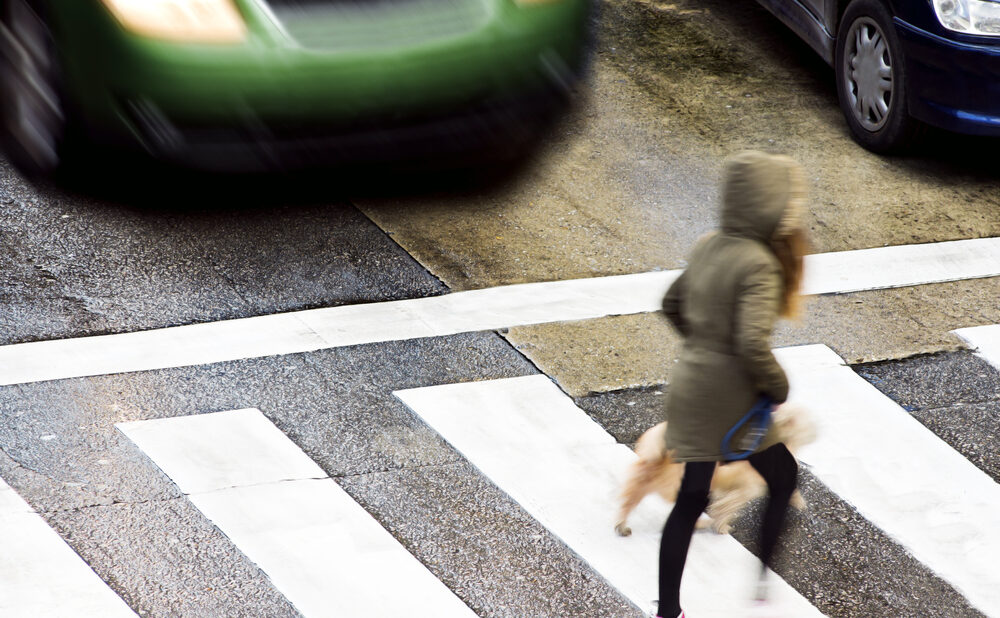
Many drivers fail to yield the way they’re required to—whether because they’re rushing, unaware of the law, or simply not paying attention. But legally, pedestrians have the right of way at marked and unmarked crosswalks in most situations.
- Crashes often occur when drivers turn left or right without checking for people in the crosswalk.
- Some ignore stop signs or traffic lights, assuming the road is clear.
- Drivers sometimes pass vehicles stopped at a crosswalk, striking the pedestrian in the process.
Under Texas Transportation Code § 552.003, drivers must yield to pedestrians lawfully crossing in a crosswalk. Violating this duty creates liability—and causes real harm.
Drunk driving and impaired driving
Alcohol and drug impairment remains one of the leading causes of pedestrian fatalities nationwide. Drunk drivers struggle with balance, vision, focus, and motor control, all of which are needed to operate a vehicle near foot traffic safely.
- Drunk drivers are more likely to drift out of their lane or onto the shoulder.
- Reaction times are slower, making it harder to brake or steer away from someone in the road.
- Nighttime pedestrian crashes often involve some level of driver intoxication.
According to the Centers for Disease Control and Prevention (CDC), nearly half of all pedestrian deaths involve alcohol impairment either by the driver or the pedestrian. But it is the driver’s legal obligation to remain sober and alert behind the wheel.
Reckless turns and running red lights
Drivers in a hurry often rush through lights or turn aggressively through intersections without checking for people already crossing. These sudden maneuvers create blind spots and increase the chance of impact.
- Right turns on red are especially risky when drivers look left for traffic, not straight ahead for pedestrians.
- Left turns without a protected arrow can surprise pedestrians in mid-crossing.
- Running yellow or red lights leaves no room to respond to a walker already in the intersection.
These behaviors are often tied to driver impatience, which is not a valid excuse under the law. Pedestrians struck this way often suffer blunt force trauma, broken bones, and permanent damage.
Drowsy or fatigued driving
Fatigued drivers present many of the same dangers as impaired drivers. Their reactions are slower, and they often fail to notice foot traffic in time to stop. This is especially dangerous near freeway ramps, construction zones, or long rural highways.
- Fatigue-related crashes tend to happen early in the morning or late at night.
- Drowsy drivers often drift over lane lines or onto sidewalks.
- These crashes are more common in commercial or shift work areas where sleep deprivation is frequent.
Even without substances in their system, drivers who haven’t rested properly are a danger to everyone on the road—including pedestrians.
The Time of Day Can Mean the Difference Between Life and Death
The risk of being hit by a car changes depending on when you’re walking. Statistics from NHTSA show that:
- Most pedestrian deaths occur between 6 p.m. and 9 p.m.
- Visibility plays a major role, especially at dawn and dusk.
- Alcohol involvement increases after dark.
In Texas, twilight hours can be particularly hazardous during the fall and winter months, when early sunsets create a dangerous mix of glare, shadow, and fatigued drivers. Wearing reflective clothing and crossing at signalized intersections can help, but those precautions only go so far when drivers fail to look.
Vulnerable Victims: Heightened Risk for Children and Older Adults

Pedestrian accidents don’t affect everyone equally. Certain age groups are more vulnerable due to mobility issues, physical size, or cognitive delays.
- Children under 15: Often dart into the streets or misjudge vehicle distance
- Older adults: May walk more slowly, struggle with visibility, or use assistive devices
- Teens and young adults: May wear headphones or cross without checking traffic
According to the CDC, adults over 65 account for 20% of all pedestrian deaths, while one in five children under 15 who died in traffic crashes were pedestrians.
Every age group deserves safer roads, better driver behavior, and infrastructure that values foot traffic as much as vehicles.
Other Contributing Factors: Weather, Infrastructure, and Visibility
Not all pedestrian accident causes involve illegal or reckless behavior. Sometimes environmental factors and city planning failures play a major role.
Here are some often-overlooked contributors:
- Low-visibility clothing: Dark outfits at night make it harder for drivers to see pedestrians.
- Inclement weather: Rain, fog, and ice reduce visibility and reaction times, especially when drivers are traveling too fast for conditions.
- Broken sidewalks or missing crosswalks: Poorly maintained or absent pedestrian infrastructure.
- Construction zones: Sidewalk closures may force pedestrians into active driving lanes.
These factors don’t excuse unsafe driving. But they often turn a negligent act into a fatal one. That’s why both drivers and municipalities share responsibility for creating safer streets.
Drivers May Try to Blame the Pedestrian, But That Doesn’t Excuse Negligence
Insurance companies and defense attorneys often try to shift the blame onto the injured pedestrian. They may argue that the person wore dark clothing, crossed against the light, or didn’t use a crosswalk. But none of these claims change the fact that drivers have a duty to avoid harming others, regardless of a pedestrian’s actions.
Here’s what you should know:
- Jaywalking does not automatically make a pedestrian at fault.
- Texas follows a shared fault system to determine financial recovery. Under Texas Civil Practice and Remedies Code § 33.001, injured pedestrians may recover compensation as long as they are less than 51% responsible for the crash.
- Defendants often use claims of distraction or clothing color to reduce their own liability.
- Crosswalk laws protect pedestrians even when signals or markings are unclear.
Even if you’re worried that something you did may have played a role, that does not mean the driver isn’t legally accountable. The law looks at the totality of the circumstances, and in most cases, it’s the driver who had the clearest opportunity to prevent the crash.
Legal Rights and Compensation After a Pedestrian Accident

When a driver’s negligence leaves you injured, the law gives you the right to pursue compensation. But recovering that compensation requires proving fault, documenting your injuries, and responding to any arguments the other side may raise to minimize their responsibility.
What happens after a pedestrian is hit by a car?
If you’ve been injured in a pedestrian accident, your first steps after emergency medical care often involve:
- Filing an insurance claim against the at-fault driver
- Documenting injuries, costs, and how your life has been affected
- Gathering evidence such as traffic camera footage, police reports, and witness statements
In Texas, your claim may include both economic damages (medical bills, lost wages, future care needs) and non-economic damages (pain, emotional trauma, reduced quality of life). You don’t need to go through this process alone. Strong legal representation helps you focus on recovery while your attorney builds your case.
FAQs Injured Pedestrians Often Ask Personal Injury Lawyers
Next Steps: Contact a Texas Pedestrian Accident Lawyer

Pedestrian accidents can leave lasting scars—physically, emotionally, and financially. When a careless driver changes your life, you deserve answers and accountability. The legal system gives you the right to pursue compensation. The right legal team can help you use it.
At Heil Law Firm, our personal injury lawyers represent injured pedestrians throughout Texas, including Corpus Christi, Houston, Brownsville, Alice, McAllen, and Pearland. We fight for maximum compensation, and we give back a portion of every case won to the communities we serve. You’re never a case number here. You’re a member of our family from day one.
Call Heil Law Firm at (361) 356-1277 or contact us online for a free consultation. We’re available 24/7, and we don’t get paid unless you win. Your fight for justice starts now—and we’re ready to lead the way.