

Key Takeaways for Bicycle Accident Lawsuits
- You can sue someone for hitting you on a bike if their actions caused your injuries, and most claims are based on negligence.
- Common driver behaviors that lead to liability include speeding, failing to yield, and distracted driving.
- Not wearing a helmet doesn’t automatically block your right to sue, but it may affect your compensation in shared fault states like Texas.
- You can seek damages for both financial losses (like medical bills and lost wages) and personal harm (such as pain, trauma, and disability).
- Gathering strong evidence — like police reports, photos, and medical documentation — significantly strengthens your claim.
- You generally have two years to file a personal injury lawsuit in Texas.
- Even if you were partly at fault, you may still recover compensation under Texas’s modified comparative negligence rule.
- Talking to a lawyer early can protect your rights and help you recover the full amount you’re owed.
Legal Options After a Bicycle Accident
If a driver hit you while you were riding a bicycle, you may be able to pursue a civil claim for compensation. These cases are handled through the personal injury system, not criminal court. The question isn’t whether a law was broken. It’s about whether the driver’s actions (or negligence) directly caused your injuries and losses.
Most bike accident claims are built on the legal theory of negligence. To sue the driver, your case needs to show that they failed to act with reasonable care, and that failure directly caused your injury.
In general, your lawyer must establish these four elements:
- The driver owed you a duty of care to drive safely, which all drivers do under traffic laws.
- They breached (or failed) in that responsibility by acting carelessly or recklessly, such as texting, speeding, or failing to yield.
- Their actions directly caused the accident
- You suffered measurable damages as a result
Proving the driver’s negligence is the foundation of your lawsuit. It’s also where evidence becomes essential. Photos, witness statements, traffic camera footage, police reports, and medical records all help demonstrate how the crash occurred and how severely you were injured.
Common Scenarios Where Drivers Are Held Liable

Drivers are expected to share the road with cyclists. But many fail to do so safely. Some of the most common negligent behaviors that lead to driver liability include:
- Failing to yield at intersections or crosswalks
- Opening car doors into bike lanes (“dooring”)
- Making unsafe left or right turns without checking for bicycles
- Speeding or running stop signs
- Driving under the influence of alcohol or drugs
- Distracted driving, such as texting or using a GPS
Each of these situations may qualify as negligence in a civil court. If the driver’s actions created an unsafe situation that led to your injuries, you likely have grounds for an injury claim.
What Happens If You Weren’t Wearing a Helmet?
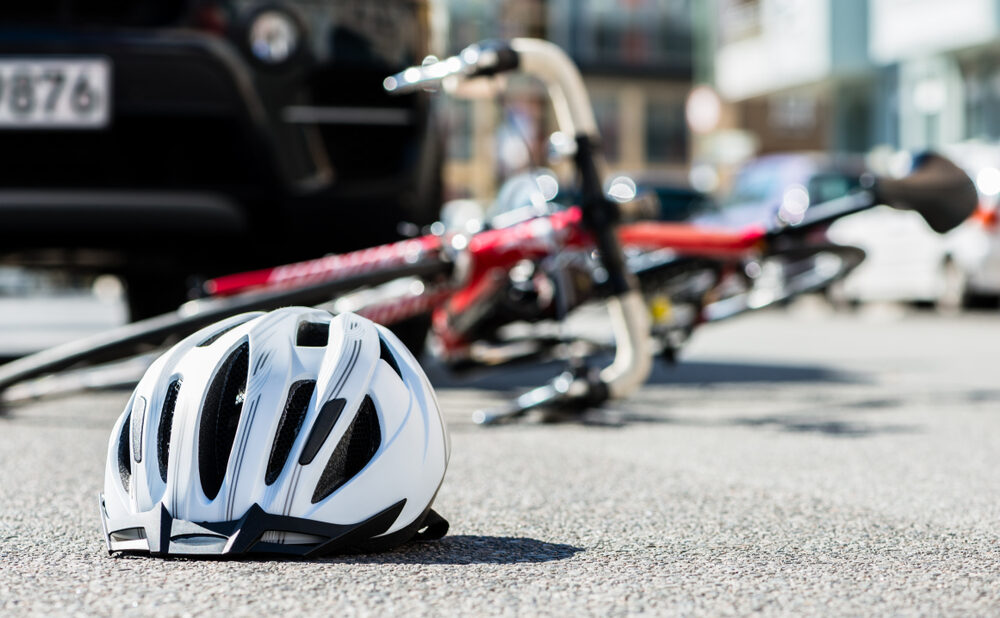
This is a common concern, and it’s a fair one. Not wearing a helmet doesn’t automatically prevent you from suing, but it might affect the amount of compensation you receive.
Here’s how it works: In most states, including Texas, the legal system uses a model called comparative negligence. For instance, Texas follows a modified comparative negligence model (Texas Civil Practice and Remedies Code § 33.001) that allows accident victims to recover damages even if they were partly at fault, as long as they were not more than 50% responsible.
So if a court finds that not wearing a helmet contributed to the severity of your head injury, your compensation might be reduced by your percentage of fault.
Bicycle Laws Protecting Cyclists Across the U.S.
Every state has its own traffic laws that apply to cyclists. In general, bicyclists have the same rights and responsibilities as motorists. This means cars must respect their right to the road and follow all safety regulations.
In Texas, for instance:
- Drivers must pass bicycles at a safe distance
- Cyclists are allowed to ride on most roads unless specifically prohibited
- Bike lanes must not be obstructed by parked or moving vehicles
- Turning vehicles must yield to bicycles continuing straight through intersections
These laws are outlined in the Texas Transportation Code § 551, which governs bicycle use across the state. If a driver violates these rules and causes a crash, that can serve as strong evidence of negligence in a lawsuit.
What Kind of Damages Can You Recover After a Bike Accident?
A successful bicycle injury claim can help you recover compensation for both financial losses and personal harm. These damages typically fall into two categories: economic and non-economic.
Economic damages
These include all the quantifiable costs related to the accident, such as:
- Medical bills (ER visits, surgeries, therapy, medications)
- Future medical care
- Lost wages during recovery
- Loss of future earning capacity
- Property damage (e.g., your destroyed bicycle)
Non-economic damages
These damages reflect the real, subjective, and harder-to-measure impact the accident had on your life:
- Physical pain
- Emotional suffering
- Mental distress
- Loss of enjoyment of life
- Disfigurement or permanent disability
In some rare cases, punitive damages may also be awarded if the driver’s actions were especially reckless, such as drunk or hit-and-run driving.
What If You’re Not Sure Who Was at Fault for Your Bicycle Accident?
Sometimes the circumstances of a bicycle accident aren’t straightforward. Maybe you were in a bike lane, but it wasn’t clearly marked. Maybe the driver claims you “came out of nowhere.” These scenarios are frustrating and can leave you questioning your rights.
This is where having an experienced legal team can make a difference. They can investigate the scene, collect evidence, speak with witnesses, and bring in accident reconstruction experts if needed. The goal is to get a clear picture of what really happened and to prove liability if the driver was at fault.
Does Insurance Cover Bicycle Accidents?
In most states, the at-fault driver’s auto insurance is expected to cover your damages. This includes medical expenses, lost wages, and damage to your bicycle, but getting full and fair compensation is rarely straightforward or easy.
Insurance companies train their adjusters to minimize payouts. They may try to blame you, downplay your injuries, or pressure you into accepting a fast settlement that doesn’t come close to covering the full cost of your recovery.
Most bicycle accident cases begin as insurance claims, not lawsuits. In at-fault states like Texas, you can file a claim against the driver’s insurance policy. If the insurer refuses to pay what your case is worth or disputes liability entirely, your claim may escalate to a personal injury lawsuit.
In no-fault states, the process is different. Your own personal injury protection (PIP) insurance typically covers your initial medical costs, regardless of who caused the crash. But if your injuries are serious and meet your state’s legal threshold, you may have the right to file a lawsuit against the at-fault driver.
Some cyclists may also have uninsured/underinsured motorist (UM/UIM) coverage through their own auto policy, which can step in if the driver who hit you has no insurance or too little to cover your damages.
Because of how complicated the insurance process can be, especially when you’re injured and vulnerable, consulting with an experienced bicycle accident lawyer before agreeing to anything is a wise decision. Once you accept a settlement, you can’t go back and ask for more, even if your condition worsens or future costs arise.
How Long Do You Have to File a Bicycle Accident Lawsuit?

If you’ve been injured in a bicycle accident and want to sue, each state sets a deadline for how long you have to take legal action. This is called the statute of limitations, and it varies depending on where the crash occurred.
In Texas, the statute of limitations deadline (Texas Civil Practice and Remedies Code § 16.003) is two years from the date of the accident. If you miss this window, you may lose your right to sue, no matter how strong your case is.
There are some exceptions. For example, if the injured person is a minor, the clock may not start ticking until they turn 18. If the at-fault driver fled the scene and couldn’t be identified, additional time might be granted. But these situations are uncommon and complex.
If your accident happened outside Texas, the time limit may be different. Some states allow three or more years. Others may require action within just one year. That’s why it’s important to speak with an attorney as soon as possible, so you don’t accidentally forfeit your rights.
What Evidence Will Strengthen a Bicycle Accident Claim?
To build a strong personal injury case, you need more than your story. You need proof — documentation that shows how the crash happened and what impact it had on your life. A personal injury lawyer will immediately start collecting and preserving evidence before it’s erased or lost for good.
Evidence that can help prove or support your claim includes:
- Police report: Always file one. It’s a crucial record of the crash.
- Medical records: These show the extent of your injuries and treatments.
- Photos or videos: Take images of the scene, your bike, your injuries, and any vehicle damage. Surveillance video, traffic camera, and dashcam footage can clearly show what happened.
- Witness statements: Get names and contact info from anyone who saw the crash.
- Bicycle damage estimates: These help establish the financial cost of the collision.
- Journal entries: Document your pain levels, recovery process, and how the injury has affected your daily life.
In more severe, high-stakes, and complex cases, your lawyer may bring in accident reconstruction specialists, medical experts, or economists to explain long-term costs and physical limitations. This level of detail can significantly boost the value of your claim.
What If the Driver Wasn’t the Only One at Fault?
Sometimes liability isn’t black and white. There might be shared fault, meaning both the driver and the cyclist played a role in causing the crash. That doesn’t necessarily block your ability to sue.
Most states, including Texas, follow a version of comparative negligence. This legal rule allows injured people to recover compensation even if they were partly responsible, as long as their share of fault is less than 51%.
The other driver’s legal team or insurer may try to blame you to reduce their payout. It’s one of the main reasons why legal representation is so important, not only to prove the other party’s fault, but to defend your own actions and protect the value of your claim.
When to Talk to a Bicycle Accident Lawyer
When to hire a personal injury lawyer is one of the most important questions you can ask when you’re dealing with injuries and losses from a bicycle crash. The answer is simple: It’s never too soon to get legal help, and unless you’ve already accepted an offer or the statute of limitations has expired, it’s seldom too late.
The moment you’re seriously injured in a crash caused by someone else, your rights are at stake. Insurance companies move fast. Evidence can disappear. Witness memories can fade. If you’re thinking about suing, talk to a lawyer sooner rather than later.
A qualified personal injury attorney can help by:
- Investigating the crash and gathering key evidence
- Talking to medical providers to document your injuries
- Handling negotiations with the driver’s insurance company
- Filing the lawsuit and representing you in court if needed
- Making sure your claim is filed before the legal deadline
- Calculating the true value of your damages, not just the initial bills
You shouldn’t have to manage all of this while healing from a serious injury. That’s where a strong legal team becomes invaluable — taking on the legal pressure so you can focus on your recovery.
FAQs About Bicycle Accident Lawsuits
Take Control of Your Bicycle Accident Case. Call Heil Law Firm Today

If you or a loved one has been injured in a bicycle accident, you don’t have to fight this legal battle on your own. At Heil Law Firm, we understand what you’re going through — the physical pain, the stress of unpaid medical bills, and the fear of being left with nothing after someone else’s reckless mistake.
Robert Heil and his team bring over two decades of personal injury experience to the table. We fight fiercely for the injured across Corpus Christi, Houston, Brownsville, Alice, McAllen, Pearland, and all of Texas. We don’t represent insurance companies or corporations. We represent people like you, and we’re relentless about getting results.
Your first consultation is always free, and you won’t pay a dime unless we win your case. We even give back a portion of every victory to support the Coastal Bend community. So when you win, your community wins, too.
Call Heil Law Firm now at (361) 356-1277 or contact us online for a free case evaluation. Let us help you reclaim your health, your finances, and your future starting today.